
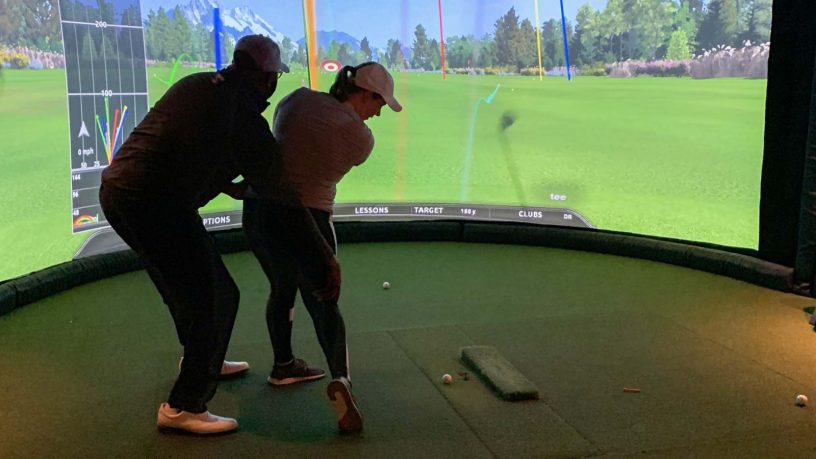
Let’s get one thing straight: golf might look like a relaxing walk in the park… but any seasoned player knows better. Behind the smooth swings and polite claps is a sport that demands full-body engagement, serious focus, and more muscle memory than a TikTok dancer.
From twisting your spine mid-swing to logging miles with a bag strapped to your back, golf takes a toll. And if you’ve ever walked off the 18th hole feeling more wrecked than rewarded—you’re definitely not swinging solo.
But here’s the good news: indoor golf lessons near me in Chesapeake, VA are quietly becoming every golfer’s best-kept secret. Not just because it’s climate-proof or techy-cool—but because it can actually help you avoid the most common golf injuries. Yup, we’re talking less pain and more play. Let’s dig into how.
First Things First—Yes, Golf Injuries Are Very Real
Golf might not be as high-impact as, say, football or CrossFit, but don’t let that fool you. Repetitive motion and poor mechanics can lead to some sneaky, long-lasting injuries. We’re talking:
Lower back pain (from that torqueing twist in your swing)
Elbow and wrist strain (looking at you, “golfer’s elbow”)
Knee stress (hello, hilly courses and awkward stances)
Shoulder injuries (thanks to overuse and bad posture)
Left unchecked, these aches can bench you for weeks—or longer. But with indoor golf, you can seriously cut down on those risks without sacrificing your swing.
So, Why Is Indoor Golf Such a Game-Changer?
Besides the obvious weather-proof perks, indoor golf simulators and training centers offer some serious injury-prevention power. Here’s how:
- A Controlled Environment = Safer Swings
No wind. No rain. No random patches of soggy turf or downhill lies. Indoor golf creates the perfect practice zone where you’re not battling Mother Nature or uneven terrain.
This means less wear and tear on your joints and way fewer opportunities for slips, tweaks, or strains. Think of it as a low-risk lab for your golf game.
- Smarter Swings Thanks to Next-Level Tech
Most golf lessons Chesapeake VA facilities come stacked with cutting-edge gadgets—slow-mo cameras, pressure mats, launch monitors, and even full-body motion tracking. It’s basically the Iron Man suit of golf training.
And that’s a big deal because it helps you:
Spot bad habits before they become painful patterns
Learn proper weight distribution and body alignment
Understand how your swing affects your whole kinetic chain
Better form = fewer injuries. Period.
- Repetition Without the Wear and Tear
Let’s say you’re fixing your fade or working on that buttery-soft chip shot. Outdoors, you’re hauling gear, bending over, and racking up mileage. Indoors? You’re laser-focused on your form—no distractions, no fatigue from trudging back and forth.
That kind of low-impact repetition helps you build muscle memory the smart way, without overloading your joints or burning out.
Bonus Round: Warming Up Just Got Easier
We’ve all been there—running late, skipping the warm-up, and heading straight to the tee box like a hero. But spoiler alert: that’s how injuries happen.
Indoor golf makes warming up second nature. With open spaces and structured routines, you’re way more likely to do those practice swings, stretches, and drills your body desperately needs.
And Let’s Not Forget Recovery
Here’s the thing—indoor golf isn’t just about going hard on your swing. It’s about pacing. You can go lighter on tough days, focus on your mental game, or even analyze swing data while your body chills out.
It’s not grind culture—it’s longevity culture.
Final Thoughts: Train Smarter, Play Longer
You don’t need to suffer to improve your swing. You don’t need to risk injury to play at your best.
Indoor golf gives you the tools, space, and support to evolve your game—without the pain. So whether you’re a casual player or eyeing that elusive single-digit handicap, maybe it’s time to give your body (and your game) a little indoor TLC.
Because feeling good after a round? That’s the real hole-in-one.
 The Official Sport Blog